Da Game 2015: Mark Rolfing at Kapalua
A tour of the Kapalua Bay Course, Arnold Palmer's 1975 design, and a long conversation with Mark Rolfing about building golf at Kapalua.
2015 · 60 minutes · Hosted by Dave Ward
Transcript
Transcribed automatically from the broadcast audio; a few names may be misspelled.
I'm Maui, west side of the island, the Kapalua Bay Course, one of two signature courses up here in the famous resort at Kapalua. A little bit about the Bay Course from a historical perspective, built in 1975 and Arnold Palmer Design Golf Course. So if you know you're coming up here for golf, it's going to be an excellent experience. When I think of the Bay Course, I think of the Consummit Resort Course. That is a course that's not too hard, but also not too easy. And if you come up here you want an enjoyable round of golf, play the resort tees, only 5,600 yards, you're not going to lose 100 golf balls and you'll probably break 100 on your scorecard.
But if you want a challenge, come up here in the afternoon, play it all the way back at 6,600 yards, and I guarantee you this course will give you all you can handle. The one thing that is consistent up here more than anything are the spectacular views. You'll see them down at the ocean, you'll see them on the hillside. You come up here the right time of year, you'll see the whales breaching, you'll see the sun shining, you'll see the rainbows. Beautiful golf course, very scenic experience. Now regardless of the tees you play and how your round goes, I would certainly suggest when your round is over to head on over to the famous Pineapple Grill restaurant here on Maui. There you can either drown your sorrows or celebrate your stellar golf play. One way or another, check into that place because they got great food. People here are fabulous, very courteous, guaranteed you'll have an enjoyable experience if you play the Bay course. So enough for the promotional stuff. This is a show about competition, so let's head out to the golf course and find out who today's victim is.
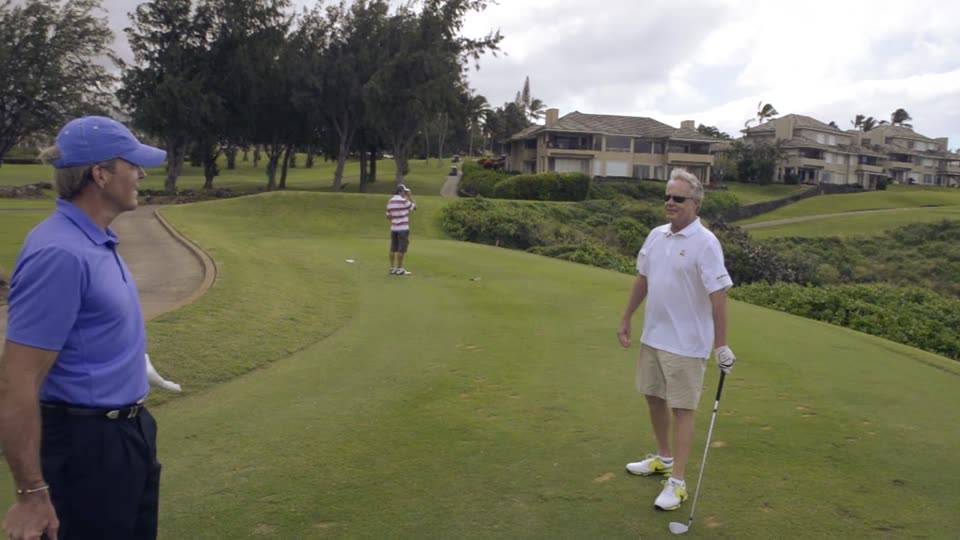
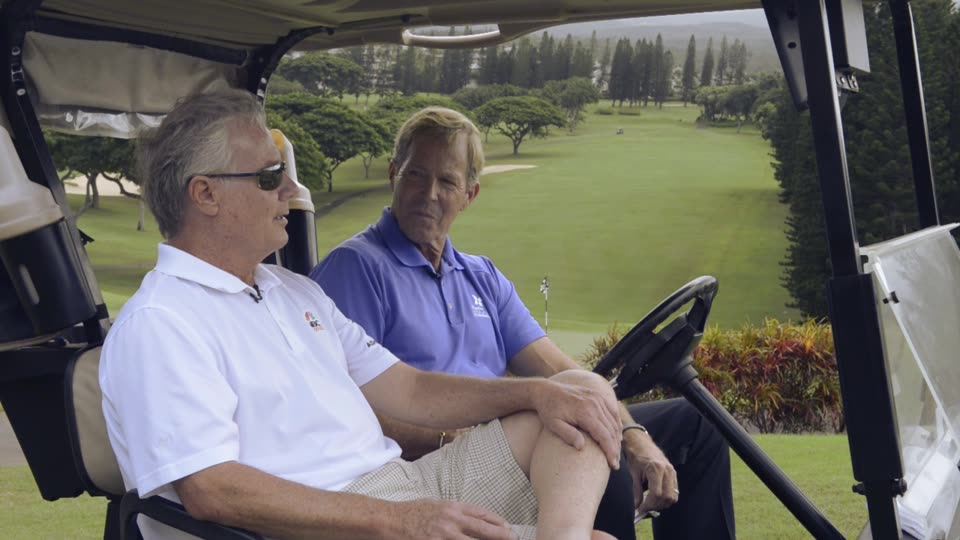
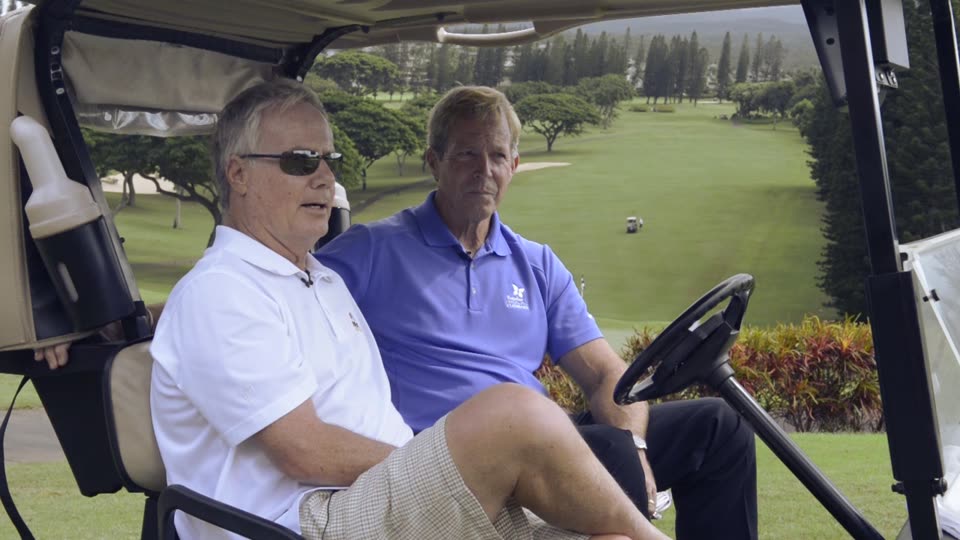
All right, we're here today on the Bay course. Fifth hall, signature hall. Now as I've told you in our introduction that this is a show about competition and that I'm here to play top pros, occasional guests and celebrities. What are the top pros? Oh sorry. Well today, sports fans, I got all three. You talk about celebrity, you know the face, I'll give you the name, Mr. Mark Rolffing, Mr. Golf on Maui. Now, I just limited that to Maui because this is where he's been living for the last 40 years, but the truth of the matter is this guy has national recognition. Check the shirt out, NBC Sports. If you've ever watched a U.S. Open, a Ryder Cup, President's Cup, Player's Championship, you've seen this guy's face, you've heard his commentary and his insightful comments.
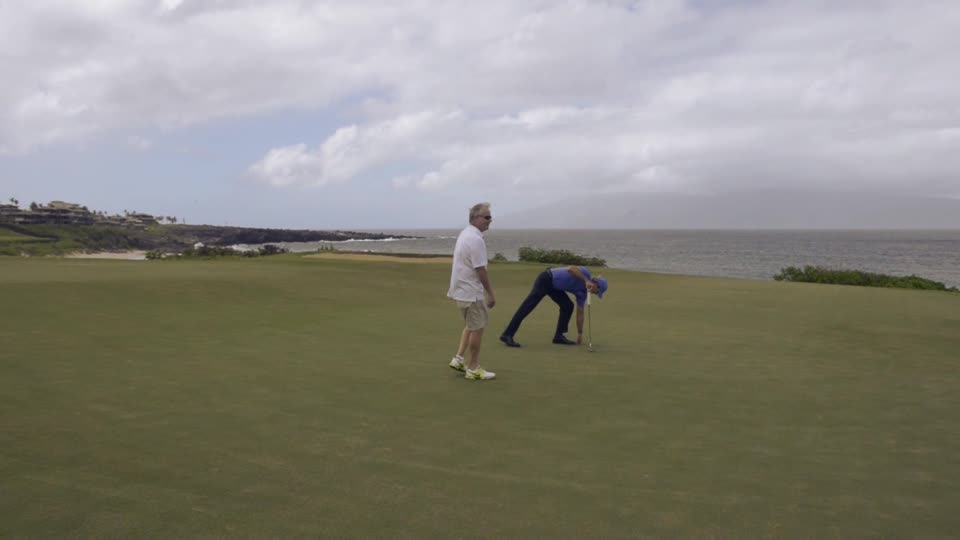
Mark, thank you so much for joining us on Da Game. Thank you Dave, looking forward to it. Yes, that intro did. We're on the signature hall of the Bay course. You know this course better than I do. Tell our viewing audience what you know about this and give us a little bit of historical perspective. Wow, this was really the first ocean front part three on this island. The course opened back in 1975, so people have been playing the hole for, oh geez, 40 years now. And some of the best players in the world actually have played this hole during all the tournaments that we had. And it's interesting, not a long shot. Looks pretty simple. The ocean really shouldn't come into play unless you hit a real bad one. The wind appears to be behind you, but you rarely see the ball close to the hole here. And as a matter of fact, of all the part three's on this course, and I think maybe even on the village course, which is now closed, this one's had fewer hole in ones than any of the other part three's. It's not a long shot, but it's a tough one. Now what I see people do all the time here, since the wind usually blows, is they reach down and they blow up a little grass, and in two seconds it's on the island of Lanai. And so they've now figured out that maybe the wind is going in that direction. So automatically they think that this hole is downwind, which it kind of is. But the key here, Dave, is the ironwood condominiums along the side of the hole there. See all those condos up there? Yeah, they're beautiful. Those tend to actually cause the wind to be going down. So the wind comes whistling through here, a typical trade wind, and you would think it's behind you and help it in. But because of those buildings, the wind starts funneling down, and it makes the hole play longer than you think. So unless you could hit the ball really high in the air, the wind doesn't help you here as much as you would imagine. Oh dude, I wanted to play you all the way back into that little spot. You know, I'll tell you, it's interesting if you take a look at this tee, Dave, in 1982 when we had our first Kapalua open here, there was no other tee than the one where this guy's playing right here. And as technology progressed, and as golfers got stronger and more fit, and the game changed, we slowly had to start working our way down the coastline. And even today, so we've ended up all the way out there, which is 203 from out there to the front edge. You know, in today's world, if we were playing the tournament of champions on this course, we would be out close to the end of the point. Wow. There are players on the PGA Tour today that would be hitting a nine iron from that 203 tee. No doubt in my mind. Wow.
Unbelievable. The game has changed so much. I mean, the golf ball more than anything else, really, but it's just it's totally, totally a different game now because of the technology. So why have put you in a spot right here where you feel comfortable in hitting whatever club you've got in your hand? It's going to be an eight or a nine for me. Okay. I'm going to GPS this thing because you're going to get one 66. Well, you know, you're going to get about 164. So Mark, how's your game besides, you know, I have not hit a bad shot. I haven't hit a bad shot in three months. Yes, I'm lobbying. Now you were a professional, right? I was. Yeah, you play back in the seventies. I did. I played so bad I worked my way right into the announce booth. I read a great quote from this guy that basically said when he was in competition, he start to feel heat on the back of his neck and his legs would get wobbly.
That's when he figured out he better give it up. Is that true? That's absolutely true. I was a choker. Johnny Miller, listen in. I you could have said that guy choked and you would have been right about me. Well, I'll tell you what, when I'm in competition, which means like I got a five footer to pick up a skin, I feel the heat, but I feel it a little bit lower on my anatomy. So we got that going for us. Let's not get into that any further right now. How about, how about, so what you got to do here today with the pin in the front is you're going to have to land this on the one yard line. I mean, right? You can't land it on the green. It's going long. Yep. You got to land right on that. See that sprinkler over there? Front left. Yep. That's my target. Okay. Well, good luck. I'm going to need lots. I might even give you a mulligan. This could end up in there. All right, boys. Here we go.
This is awesome. Oh, hit him. I pulled those guys in the golf cart please. Oh, look at that release down. I just pulled it a little. Chippin' a putt. Not bad for a swing in a muck. You should see what I feel like now after making that swing. Dude, the guy falls out of bed literally. You drag him out here to play golf and he puts a decent swing on the ball. So we got to actually go up there and chip and putt now? Absolutely. All right. If I'd have known that, I would have tried to hit it closer to the hole. You can comment on my, you know, Mark does all this insightful golf commentary, but he also analyzes golf swings. And I remember in 2010, we were at Connolly for the Senior Skins game and you, that was the last time Jack and Tom Watson played in one. I interviewed you that day and you were going to do some color commentary on Jack's golf swing. And I wanted to hear that like that would have been all time. What if I had said Jack Nicklaus had a crummy swing? I don't think people would believe it. And I was thinking it would have been the last time you ever did commentary on a golf swing, but you can do mine behind the scenes. I'm going to do my commentary after you swing, Dave, not before. You know, I'm physically fit, but I'm really not much of a golf. Starting to feel that burning sensation.
That's going to be better than mine. You were talking about that sprinkler head on the left hand side. That's a pretty good shot, Dave. I got to give you that. All right, fellas, go ahead. We're going to walk up with you. Holy mackerel. I got to either pray for a three-putt out of him or awesome. I get a check from John Byrd or chip one in. We didn't say how much though. What? How much the checks for. I don't think you're going to see any check. I hate to tell you. So at the Ryder Cup, I'm not going to name the US player. And actually what made it even worse is there was two guys on the same team. Didn't understand European tour rules, which are different than US rules. Really? So here's your little rules thing of the day.
In America, a sprinkler head is only an obstruction if it interferes with your stance, the lie of the ball, or your intended swing. Okay. In Europe, a sprinkler head is an obstruction if it lies within three feet of a putting surface and is in your line of play. So in this situation in Europe, you could move your ball. I could move my ball. Now, the reason I would do this is here I am here and I've got this huge knob I'm dealing with. So if I move to here, put a T down, which would be my nearest relief, no closer to the hole. I now have a club length to here and I can now drop the ball within a club length of this. So you could almost put this. So I could go from here to here and actually put the ball and not deal with that knob. So where people are always complaining about the rules, actually the rules can be to your benefit a lot of times. Now this, you can't do that in America, but in Europe you could have done that right now. So you're not lobbying to pretend that we're in Europe are you? Wee-wee. Do you have the club you want? I've got all kinds of other ones there.
I mean you're not going to hit a good shot. So the shot is so hard anyway that I'm not sure what I'm going to do. But I'm going to try and chip it with the same club I hit off the T and I'm going to try and just go skirt right around the corner of that thing. Nice. Oh this is going to be a hard shot here. This is great sports fans. I want to see this one. Release. Fight! Release! Fight! Oh my god. It's not that good. Wait, you hit that. You thought that was going to be great. I thought that was going to be tight. Kind of ran out a little bit didn't it? It did. I am disappointed I must tell you. I would be too. I thought that was, I started to get scared except now I got a little bit of a feeling.
I should have come up here and gotten a sense of how fast this was. You know the one thing you don't ever want to do David, is leave it up here though. You just can't leave this one up here. I just wanted to make sure you understood that before you put it. Yeah. If you play in my golf group and you four-button this distance, you have a buddy in your force of five bucks. I don't want to really do that. But you're in a perfect spot to hit that back on the kiln right now. So it's not an easy putt either. Not. Nothing's easy. You know if you had told me not to aim at that sprinkler head, I probably could have been on the other side of this hole. So I got some bad poop from a guy who knows his golf course like the back of his hand. I think he was just trying to win. Okay. Folks, he cannot afford to leave this one short. So watch this. This one's going to work. It's going to cause a little bit of a problem. I'm hoping he leaves it short because if he leaves it short, he could three-butt having left it short.
The Sergio's gone to the claw and so have I. He may go back if he hears that. Please give me a good putt. Pretty good Dave. I got to hand it to you. That's a gimme. Pick it up. All right. A gimme. That's a good putt. Nice. You know, did it look to anybody like he might have been lagging that putt? Like maybe he wanted so desperately to make a putt that he wouldn't even take a chance of trying to make it. Awesome. Dave Warfinger's golf show celebrity takes down Mark Walfink. Look at that. You've been clapping on the run high. You guys must not be able to see what's going on down here.
Oh please make him miss this. You want to know how bad my career was? This is one of the biggest putts of my career. Okay. Now, what do you tell the viewing audience what you're doing here? I'm just going to make it. Here's the thing Dave, you can't get up there and make it too complicated. You just got to make it. What a great up and down. Oh, but the 7.3 index suspect golfer plays the golf pro and he doesn't get strokes. I think I won. John, you owe me money. Oh, hard break again. It's my life on this golf show. That could have been your breakthrough actually. Sorry. I didn't mean for that to happen. This was going to be my signature show. Now it's just one more embarrassment. Don't take it so rough. What a great player I am.
No, that was good. You hit a better shot than I did. Yeah, that's true. So now we need to go talk some story because one of the real benefits of having you on the show today is to get a little bit more of a historical perspective on what's going on up here in golf in Capaloo. I mean, you can't say the name, Capaloo, of golf without having your name right next to it. And whether it's our other signature course up at the plantation or this at the bay, I mean, you just been your name synonymous with golf on Maui. So I say we go to the clubhouse. Let's go to the clubhouse and talk story. For you out there in the viewing audience who missed the drama, which was riveting, I'm going to do a slight recap here for you. We played the fifth hole at the Bay course.
And I let Mark go first because he's a celebrity and world renowned. He had kind of a crappy shot. I'll be the judge of that. Come on, man. I'm doing the commentary. Okay, you're right. Okay, so he hits a crappy shot and has left himself an impossible chip. I step up and smooth my shot 15 feet a little above the hole. As we go up to our second shots, Mark is lobbying really hard for some European golf ruling, which would allow him to place his ball by two feet from the hole. Of course, I summarily reject that, make him hit a difficult shot over sprinkler heads. And the guy executes a great golf shot. I was nervous for a second that it was going to go in. He slides it by about five feet. Now I have a nice little 15 footer downhill and I'm feeling pretty confident when I walk up to the ball and Mark starts to tell me stuff about, well, don't let it go too far. You better be careful. This is a good...
So I end up lagging it within a foot and tap in. And I notice a smirk on Mark's face as he approaches his little five footer and he rims in the back of the hole and we tie. And so while the drama was riveting, instead of the thrill of victory and the elation that I was supposed to feel from beating Mr. Rolfing, he basically snatched it from me and threw it into the Pacific Ocean. Now Mark, was that a fair assessment of how that went? Folks, let me just say this and I'm going to try and be succinct with my words in brief. Dave is the host. I'm the analyst. So here's how the analysis of that hole went. I did indeed play first and I would not call it a crappy shot. It was hole high, a little bit long maybe. But the whole point of me hitting the ball there was to give Dave some sort of hope that he might actually win the hole. When in fact, I did miscalculate this a little bit. I thought if he could get it on the green, I was guaranteed to get a three-putt out of him and then I would win the hole. So his analysis of what happened was actually couldn't be further from the truth. And he was lucky, lucky to get a tie out of that hole.
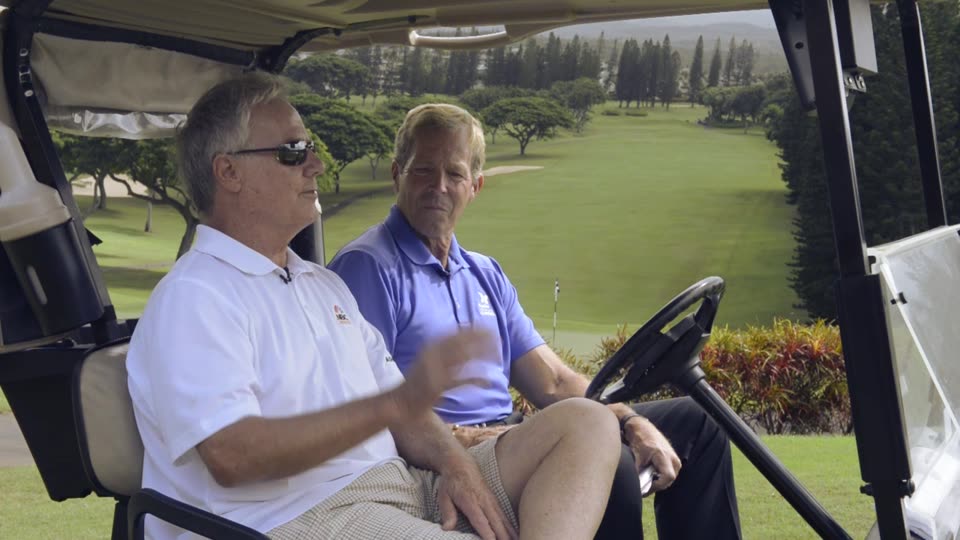
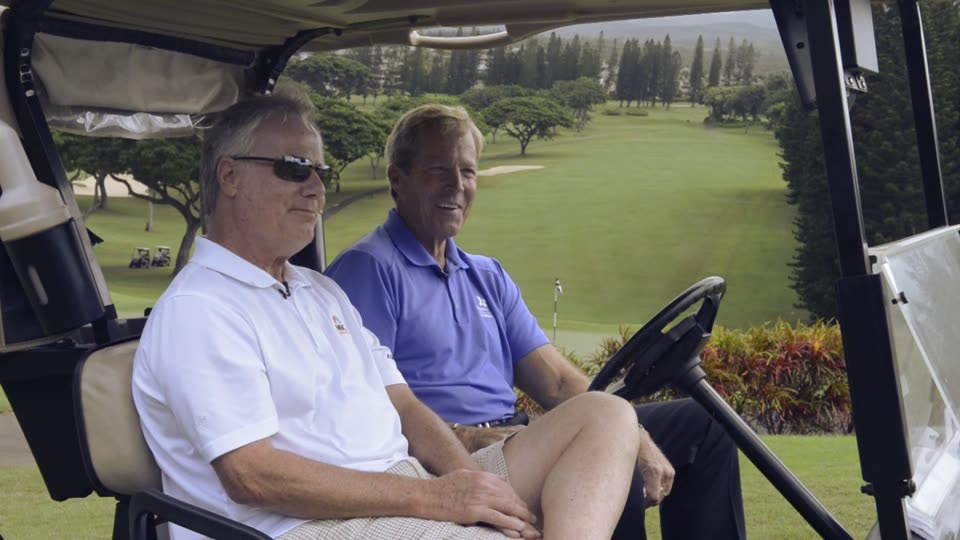
Yeah, well, see, you know, two famous golf show celebrities, two different views on life. And isn't that what it's all about? I mean, you know, so who you're going to believe, man, is my golf show for God's sake. Mark, one of the real treats in getting you to come out today was not for me to play in or a little match out there on the Bay course, but more to give you a chance to, for me to pick your brain about, you know, life here on Maui, golf here on Maui, a little bit more of a historical perspective for the viewers that might not know, you know, what some of the history is out here. And you've been involved with it from the beginning of time. And so maybe starting at the beginning of time, answer me how a polypsych major from Chicago ends up here on Maui doing the stuff that you do. Well, you have to have a lot of good luck, first of all, Dave. And it's interesting when I look back on my time on Maui, I'm sitting here in a golf cart by the by the practice putting green in the bay. And I can see the roof of the first apartment I lived in on this island, which was over in the Peely Sands, just on the far side of the 15th hole here now at the bay. And that was early in 1976. And basically what happened was, I was a polypsych major, I had intended to go to law school, I have a master's degree, if you can imagine that. And I started playing really good golf in college, won a couple tournaments, and got way too big for my britches. Stop there for a second. You had a famous, famous roommate who also played on your golf team, who was Dan Quayle, the Vice President of the United States. And what's amazing about that now, and I see him a lot and we still play together, all of a sudden when he became the Vice President, his college career was a lot better than mine. And I kept telling people, take a look at the, take a look at the records here, everybody, and let's see exactly what happened. And the further he gets away from playing in college, the better he was back then. It's amazing. So, yeah, he went into politics and did pretty well for himself, obviously, but I got sidetracked by golf, Dave. And I got a little too far ahead of myself thinking that I was going to be the next Jack Nickless and kind of packed in my whole education and everything for chasing this little white ball around the tour for three years, which I did, and didn't do it very well, unfortunately, or fortunately now, looking back, it was fortunate. But what had happened was, I had played in the Hawaiian Open in 1976, I guess it was, or 75. And that was the first time I'd ever been in Hawaii. And I kind of fell in love with Hawaii. And I remember thinking, wow, this is exactly what I imagined, you know, growing up in Chicago and hearing ukulele and Elvis Presley. And it just was so perfect. That after that season, when I'd had a really bad season, I had to go back to the PJ Tour qualifying school again, missed qualifying, couldn't figure out what I was going to do, decided to come back to Hawaii. I'd met this lovely girl in California that came with me. And we were flying to Honolulu, going to go right back to the Sheraton Wike Key and spend a week there and the flight attendant talked to us literally into coming to Maui, which I had no intention of coming to this island.
We went straight to Hana. She gave me a number of a lady to call her that had a house. We stayed in the house there, then rented a car and drove up to this side of the island, had no idea what was up here. And there wasn't much. There was nothing, nothing. And the bay course had just opened. There was a little temporary building over in the village there that was the pro shop. And the rest is history plopped down for a week and basically never left. So this girl that you met, did you like capture her in Hana and force her to marry you? We didn't actually get married for a long time after that. But, you know, she loved it here too. And neither one of us had a whole lot of money at the time. So she ended up taking a job as a cocktail waitress down to the Sheraton Maui. And I got a job washing golf carts at Kapalua basically was the job. Interestingly enough, I fell in love with the island so quick that I knew that I really liked it here. So I went into the pro shop at Kanapali. Hadn't been to Kapalua. Went to the pro shop there and asked them if there were any openings by any chance.
And the answer was no. So, but they said, you know, there's a new course that just opened up the road about 10 minutes. You should go up there and ask them. So I left the parking lot at Kanapali and up I drove here and set up a job interview. The next thing I know, I got hired to wash the golf carts. Were you getting paid big bucks for your advanced degree? You know, I think it was wow, four seventy five an hour maybe. Something like that. It's pretty good at the time. Oh, man, what a labor I love. I did manage to crash a cart on my first day at work. I was so nervous. I was taking it into the into the cart barn back there to wash them. You washed them in the back and I was not paying attention. I hit the corner of the bumper on another cart. So I hit that cart and then the back swung around in the back of my cart hit another car over there. I had a three-cart crash my first day at work. So you go from this yum yum that is washing golf carts to what? Well, I actually got hired then as an assistant pro and gradually became the head pro and the director of golf and started working my way up in the organization. Kapalua Land Company owned everything at the time and that's all I worked for. And the great thing about golf is, you know, you meet so many great people and so many important people and so many interesting people and for me, no matter that I couldn't beat anybody on the PTA tour, I was still the best player on this island at the time because there weren't many players on the island.
And so when Arnold Palmer started coming out to design the second course at Kapalua, the Village Course or when the President of the United States came or when Jackie Stewart or any of those kind of people came, they would take me right out of the shop and send me out to play golf with these guys. Oh, wow. And slowly I started meeting people and it was really only because of my ability to play golf at the time. I had no signs on becoming a marketing guy or a television announcer or anything like that. And it just, it all happened because I was in the right place, Maui, Kapalua in particular at the right time when I just got real lucky. So bringing the professional golf to Kapalua, I mean, sounded like you started it with an association with the Lincoln Mercury here at the Bay Course, but then transitioned me to the point in time where you're the developer of our world-class plantation course. And how does that play out? Well, the way it played out was I had become sort of the director of marketing and recreation for Kapalua in the early 1980s. And that job, then I was responsible for the golf operations, but also the overall marketing of the resort. And I played a couple more times in the Wine Open, which I qualified for when I was over here as an assistant for and I started realizing that the most famous golf course in Hawaii was Wile I Country Club, which was private and nobody could play it. And so I started thinking, well, if I'm in charge of marketing the Kapalua resort, and we're having trouble getting people to play golf out here because we're at the end of the road and it's windy or whatever the reasons were, maybe if we had a tournament, we could make this course as famous as Wile I Country Club.
And so that's basically the premise under which I started the Kapalua International in 1982. And, you know, back then, because I had relationships with people, I was able to go to Arnold Palmer and say, hey, you know, if we have this tournament out there, will you come and play? And he said, sure, I'd do that for you. And of course, nobody believed me around here that we could actually have a tournament, you know, in Arnold Palmer would come and play. But I knew a lot of guys from having played and we put it together and it worked. And so that that event was played here at the Bay Course for about five years and became so big so fast network television and all the best players in the world plan that it basically outgrew the facility, not so much the golf course itself, but the limited facilities. And so my real motivation in going up to the plantation, which was nothing but pineapple fields then was to create a facility that could host a big championship. And you were able to get Ben Crenshaw to go up there with you and put his name on it as well, I guess from a little layout.
I did. Yeah, you know, Dave, this was Ben Crenshaw and Bill Cours first course. They're now the number one architects in golf and have more top 20 courses than anybody. They are really, really good. But this was their first one. And I was pretty close with Ben. I had played a lot of golf with him. And I needed somebody that I knew was going to be here on this island a lot building that course because it was a very severe piece of land. It had elements and conditions that sitting in an office in Florida, you would never be able to figure out trying to draw golf. And even though I took a little bit of a chance with Ben, maybe it worked out great because he kept fine tuning that thing until we got it exactly the way we wanted it before we opened it. And since we've tweaked it quite a bit, but it was a great decision. And he literally rode the Sand Pro and did the final grading on every one of those 18 greens up there. Amazing.
He's a visual kind of a guy. He's a lot like me. And I'll never forget good cutter kind of like me. Yeah, kind of like you only he would never use that big fat grip you got on your part. So I'll tell you the day the day that I was convinced Ben Crenshaw was the right guy. He called me up and he said, what are you doing? It was about 11 o'clock in the morning. He said, let's have lunch at the Honolulu store. I'm up here. Can we have lunch? And so I said, sure. So I came up and had lunch with he and Bill Corp. And he had bought a big bag of Maui potato chips. Good stuff. Good stuff. And we were having trouble trying to figure out the third hole on the plantation. And he took a bag of Maui chips with Bill and I sitting there and emptied them out on the picnic table up on the plantation. And he started leafing through this bag. He pulled out one of these chips. He said, there's the third green. There it is. I hate that green.
And I'll be darned. That was the third green. Okay. That's when I knew he was the right guy. Oh my God. Did he use any potato chips for any of those other greens? Let's see. I think he, whatever used for 18 didn't work because we had to rebuild that one a couple of times. Yeah. He must have used like a Polish sausage or something for that one. I don't know. Anyway, so that's the story. And so in the early years, when we were doing the post-season event before the tournament of champions, we actually played the bay and the plantation. But now just because the PJ Tour has gotten so big, that's the only facility that, it's really the only facility in Hawaii on any neighbor island that could host an event that big. How did, how did you get the pros to come over for the tournament champions? I mean, what, what was the connection that made that come to play? Cause that used to be the beginning of the golf season, the signature event that kicked off the golf year. I mean, I mean, it still is now as the Hyundai with the prior, the previous winners from the, from the year before all being selected to come out. I mean, what a great event up here because you don't have the crazy crowds that you have on the mainland when you have an event like that.
But how did you convince the PGA to bring that up here? Actually, they convinced me, believe it or not, we, we were having the post-season event, Kapalu International, Lincoln Mercury was the sponsor for a long period of time. And that was still being played all the way into 1997. And it was the PGA Tour that came to us and said, we would really like to have an official money event at Kapalu. It's a great site. We want to start the season in Hawaii. What would you think about tournament of champions? And frankly, Dave, I was not totally sold on the idea at first. It turned out to be a great idea. But what we had going was pretty good. And we really liked it. I was worried, you know, about how we could actually pull off an official money event. It was going to be a new sponsor. It was going to be painful because we were going to basically eliminate Lincoln Mercury, who had been a good partner of ours and then replace them with their competitor, Mercedes. That was not an easy conversation. But it worked and the tournament is going strong now. And I think as the world of golf changes, that tournament is going to have to change some. But it's been very effective for Kapalu. And I think if you look at the Kapalu brand, the facilities here are not that different than they were really through all the 40 years that I was here other than the plantation being developed. But just the fact that this has become the home of the PGA Tour out here, it changed everybody's viewpoint of it.
It changed everything. We were still at the end of the road. We are still at the end of the road. And the wind still does blow. But now we're at the end of the rainbow. It feels like it's just a totally different mindset. And it's been great. All the people that have worked here through the years became invested in this tournament and became part of their whole spirit here. And so many of the pros realize that rather than take another job somewhere else, man, if I could be here just one week a year and meet Jack Nicklaus and all these people in the end, it's going to be a great thing. So the tournament has really done a lot for this resort, not just in terms of how many television viewers watch it on TV. It's done way more than that. Fabulous. So how do we get to this? NBC Sports, all commentary on to me the major golf outings, the US Open, the Players' Championship, the Ryder Cup, the President's Club, side by side with Johnny Miller, Jaw Jacken, giving insightful comments and becoming really a national figure in the golf commentary world. How does that happen? I wake up every morning and have for 27 years now and ask myself the same question. It started right out there on the 16th hole, basically, of what happened. And it was 1985, the Coppola International, and I was playing in the tournament still back then, even though I was kind of running it and putting it together.
I was in control of the sponsor exemption, so why not give one to me? And I happened to play a good round on Friday. And they brought me up into the announce booth, which we are sitting right where it was. Actually, it was right there. The announce booth at 18, and the announcers were Vince Scully and Lee Trevino. And Vince Scully and Lee Trevino. That was pretty cool. I couldn't believe it. I couldn't believe I was up there. And while we were up there, now you gotta remember that back then there was no Gary McCord, there was no David Farrity, there was no Mark Roffin. Back then, when you came up for an interview, they asked you, what holes you birdied? What clubs you hit? See you later. So I'm up there. And in the meantime, Peter Jacobson is out on the 16th hole. We're on live.
And he has hit his ball into the hazard in the center of the fairway. And Trevino is basically saying he's got no options now. He's going to have to go back to the tee because the ball entered on the left side with all his high weeds and rough. And he's not going to be able to drop it there and he can't keep that point between him and the hole. So he's going to have to go back to the tee, to which I said, well actually, that is a lateral hazard, which gives you another option. And he can go to the other side of the creek and drop the ball in the fairway. And I didn't even cross my mind what Trevino would think about me saying that. But anyway, so we went through 10 or 15 minutes of this scenario and they were trying to figure it out. And we basically engaged in a conversation about this ruling and this drop and my understanding of the course. And so then I left and the producer, Don Olmeyer, who was a legendary producer back in the day, ended up doing Monday Night Football on NBC, called me up at home that night. He said, you were phenomenal in there today. How would you like to come up and do a little guest segment tomorrow? And I said, no matter what I shoot, he said, no matter what you shoot. So I said, okay, so sure enough, I shot 76 the next day. And but up I go. And I'm in there now for half an hour the next day and telling stories just like I am with you or talking about the course or what Arnold and I did out here, you know, 10 years before that or whatever.
And we went through the whole weekend. I did it every day during that round and he was waiting at the bottom of the steps. The producer was and said, do you want to go to work next week for me on ESPN at the World Cup in Palm Springs as an announcer? And I said, yes, me? Who are you talking to me? Little Olmeyer. And that was it. That's how it happened. And here you are today. You know, he gave me the greatest advice. I'll never forget it because I got to Palm Springs. I was scared to death. I knew nothing about television. I don't think I had ever had a mic on. And he said to me, I want you to think about one thing no matter what. However long your career goes, Mark, I want you to think about one thing. And that is always be you. Just be you. Don't ever try to be something you're not.
You know, don't try and be a jokester if you're not a jokester. You know, you are the common man. And that's what worried me. I was worried, why would people listen to my analysis as a club pro from Maui? And I asked him that and he said, people will listen to you if they believe you. And you're going to be able to make them believe you if you're you. If you're trying to be something else, then they're not going to believe you. And he was so right. And to this day, I think about that all the time when I get into situations where sometimes I, you know, especially if I'm on with ferrity, I mean, how can you not start trying to act like him? It's almost impossible. But so I try. Yeah. So I just I try to keep that one thing, just be true to myself and be me. And it worked. I don't know how, but it did. Well, you got some interesting personalities that you work with in the booth with, you know, him on one end of the spectrum. And then you got Johnny Miller on the other side.
You're somewhere in the middle trying to, you know, balance the voice of reason. Exactly. Between two maniacs. It's, it must be fun. It's fun. It's an interesting dynamic. So Johnny and I have worked together now since 1991. So that's 23 years and we haven't killed each other yet. Come close. Well, he didn't talk to me for about 20 minutes on the air at the players a couple of years ago when I was with Tiger's group and Tiger had hit a ball in the water. And Johnny didn't particularly like where he had taken his drop. And, you know, I was listening to Tiger talk to his playing competitor. And I was okay with it. And Johnny kept saying, it's not right. And we went on, you know, half hour later, we're on the 16th hole. This hole's been over forever. And Johnny goes, I just got to say, he says this on the air, I don't feel good about this, this drop, you know, the Tiger made. I said, Johnny, let it go.
I was down there. I listened to the conversation. I was fine with it. Who I didn't hear from him for about, I don't think I did for the rest of the show, maybe but I love Johnny and he has the best eye of any golf analyst I've ever worked with. And he doesn't have a filter between his brain and his mouth, which gets him in trouble sometimes. But it also, you know, it also he's one of the few people that viewers are going to turn in, tune in to listen to, you know, they're not going to tune in to listen to Mark Rolfen, but they will tune in to listen to Johnny Miller. Well, I'll tell you the combination that you guys have. I mean, adds a lot of excitement to watching around the golf, because I wanted to ask you this, your impression of, you know, golf in the professionals today, because it just feels like that the world is waiting for some new star with some kind of star personality to leap forward and grab the tour and make it exciting again for the viewing audience. Or, you know, will Tiger please get healthy, come back and, you know, be the same guy, because it's almost feels like sometimes these golf tournaments, when you look at the leaderboard, I mean, I follow golf quite a bit and I struggle sometimes with who's playing and who's winning. And then it makes me wonder like, well, then who's watching.
Well, there's a couple problems. The first problem is so many of the young players that are coming out now are so robotic that you aren't interested in watching them play and neither is anybody else. And that's part of what they are being taught. They are being taught and prepared for PGA Tour Play to basically to go into a zone and, you know, not acknowledge what's going on around them, filter out anything bad, everything's positive. And it's really changed the dynamic of Da Game. You don't have any characters anymore. The other problem is the equipment has become so good that it's leveled the playing field. And you don't have guys that come out where the necessarily the most talented guy or the most talented shot maker can come out and be a really dynamic player and dominate the game and cause you to want to watch. You mean, just that stupid putter I just putted with that you have down there with that thick grip.
Nobody had thought of that before. You know how many guys are putting great now with this thick grip? It has turned bad putters into good putters. And I'm not saying that's bad. I think it's great for the average player. But in terms of separating the true stars at the highest level, these 60 degree wedges and these forgiving thin-faced drivers, they feel like they're not anchoring it. I hear you. I hear you. But you know, I think the playing field has been level. I'm not saying Keegan Bradley wouldn't have won a major. But I'm not sure he would have won a major like that without anchoring a putter. For forever golf has been the kind of sport where it's difficult to create a rooting interest. Now Tiger Woods changed that. And a lot of people started rooting for Tiger. But if you think about the other successful sports day, you take a look at the NFL. Anybody who's watching an NFL game is rooting. They're either rooting for their favorite team. They're rooting because they made a bet on Da Game. They're rooting for a variety of reasons. It's their hometown you name it. Same thing with NASCAR. They root for a driver.
They hate another driver. So they're going to root against that guy and they're going to root for that guy. In golf we never had that. It started with Nicholas and Palmer. And people hated Fat Jack at the beginning. And they despised the fact that he was unseeding Arnold Palmer. But that was the only situation we had in my entire playing career where we had a love-hate relationship. You got to have that in sport to have interest. Even when Tiger went through his hard times and people started rooting against him for the overall good of the game, it wasn't that bad because we were still creating a rooting interest. In today's world when you talk about these players that you don't even know, how are you going to cause a viewer in the audience to either root for them or against them? It's going to be extremely difficult. So I think any of this rooting, that's why I love the Ryder Cup. The Ryder Cup is totally different. It's wild. It's crazy. It's a hard place to announce golf. It's partisan. It's all for and all against depending on which country you're playing in. But man, that is good. And that's why that event, which has gone from being maybe 10th or 11th or 12th best tournament in the world, I think it's number two now. I think if you take a look, if you took a poll among all these people, these guys that are sitting here listening to us, they would tell you that's probably the second most popular tournament in golf after the Masters. Okay. So we talked a lot about your history here. I want to know like maybe who are your top five golfers, professional golfers that you've met over here that, you know, in your history here have met something to you that you really have fond memories of and relationship with? Well, you talked about local golfers or any golfers? Any golfers. Well, Arnold Palmer is number one. I mean, matter of fact, here's number one and here's three, four, five all the way down to a million.
Arnold has had such an impact on me personally and my career that it was really hard for me to put in words. I'd never met anybody in my life like Arnold Palmer. And I'll tell you what's interesting, he's 84 years old, 85 now. And I still think Arnold Palmer is the most popular golfer on this planet. I truly believe that. I don't get to spend that much time with him. I had lunch with him at the US Open at Pinehurst a few months ago. But I watch him walk around and everything he does just to me embodies what a golf professional should do, even including signing his autograph. I learned to sign my autograph from him. I remember him telling me, you know, someday you're going to be famous. And he said, you don't ever want to see you scribble your name.
I said, nobody's ever asked me for my autograph. He goes, you wait and see. But to this day, I watch him sign autographs and they're perfect. And I watch him shake people's hand and look people in the eye and be genuinely concerned about them. I love the guy so much. So he's number one. You know, I had a group of guys that I played some with and that became the little Kapalua group of national professionals that sort of helped me out. Davis Love became one of my best friends in the world. Fred Couples. It's mostly the guys that were part of the original Kapalua international group that won the tournaments here, but also helped me organize things and helped me get everything together. You know, starting a tournament is like throwing net in Hawaii, which is difficult to do. But if you throw a net and you got the net out there in perfect position, you know, on the water, but you pull in one side of this net too fast, all the fish are gone. You got to pull in all the pieces at the same time and doing these tournaments, whether it was the first one or the 15th one, you had to kind of do it that way. You had to convince people that you had Davis Love and Fred Couples are going to play so that the TV would televise it. But you had to convince Davis and Freddie to play because there was going to be TV. And then you had to get a sponsor so that they could pay Davis and Freddie to play, but you had to convince them there was going to be TV. So you'd have all these things and you had to pull them all in at the same time. And so I had a group of guys that really helped me in that regard. So they would be right at the top of my list. And then, you know, I go to the complete other end of the spectrum, Craig Williamson, who was the director of golf here when I first started and got me going. You know, I think about him all the time. And then I think about Mike Jones today, who is my guy here at Kapaloo. And I love him to death. And he does a great job.
And, you know, the job that he plays in the world of golf is just as important. In my mind is the one that Rory McElroy plays right now. Because Mike Jones is the heart and soul of the club professional and Rory McElroy is the best player in the world. But Rory wouldn't be that without Mike Jones and Mike Jones wouldn't be that without Rory McElroy. I hear you. I hear you. One other thing on the lighter side. We, and actually I was chatting with you a little bit about this on the 15 before you tied me in our golf match about three years ago in Lake Tahoe at the Edgewood Country Club at the professional players celebrity golf tournament that they have annually up there that NBC or I guess the golf channel covers. And you were one of the commentators. And I was a spectator that day on the 16th green, watching the pros, not the pros, but the celebs play. And I was waiting with baited breath for the group with Michael Jordan. And he happened to be playing that day with Tony Romo and Ray Allen. And I'm standing by the green, you know, heckling some of the guys that come off, you know, doing my thing. And Ray Allen's in the middle of the fairway hitting into the green and he smokes one that starts hooking left into the tree line. And I'm there with, you know, maybe 50 spectators and they're all covering up and protecting themselves. And I'm like, Hey, what are you guys worried about?
There's pine trees all over here. It's going to hit a branch. It's going to fall down. There's not going to be a problem. This ballgum straight through all those pine trees hits me square in the noggin knocks me out cold, splits my head open. I care. No, I'm looking for my iPad. I'm going to show you a picture. Did you take my iPad? I'm probably sitting on the, uh, well, you keep going. I'm going to show you a picture here. This is relevant to this case, folks. Paramedics had to come and revive me. I'm coming out of this stupor and my wife comes up to me and she goes, Dave, Dave, you just got hit by Ray Allen. Aren't you happy? But what's even more important is Mark Rolving, our neighbor, a mallie is following this group. Get him. I'm going to get him to come over here and talk to you. I go get him. Oh, please get Mark Rolving come to talk to me. You know what? Ray Allen came over through a couple of little pesos at me, gave me an autographed golf ball that says Mike Brick. They loaded me on a golf cart, took me to the tent, sew up my head. Never saw him off the wall. Mark Rolving, but today I reminded him of that and he remembered. Unbelievable. So give me my iPad here, Dave. I'm going to find it.
Yeah. Hang on. So I had it back here. I got it. Yes. So I'm going to show you a picture, folks, and I'll tell my version of the story. So I don't know if you can, um, can actually see this picture, folks, but I'm going to bring it right over here to the camera. So this picture was at Lake Tahoe on the day before the incident that Dave was talking about. That would be Michael Jordan. That would be Tony Romo and that would be Mark Rolving. Now what actually happened that day was we had two other guys in the group and on the day of the incident, this man right here got replaced by Ray Allen and Mark got the microphone and became the announcer. And so I'm fully aware of what was going on this day and then what happened on the day with Dave. Here's the thing. When I'm announcing live golf, like I was, when he got hit, I can't like stop and go over and start talking to him about the fact they're not taking out the trash at the iron woods on time. And frankly, the ball fell out of a branch of the tree. I mean, if it would have hit me in the head, I don't even think, I didn't think it would hurt. So how this gash opened up on his head, I have no idea. I was not aware at the time, I guess that's what I'm saying, that this incident was as serious as Dave is now making it out to be. But I will say this, Michael Jordan did not go over there and it wasn't because they didn't care about what had happened to Dave. It's just that he was so focused in on his game and he knew that he got over there and Dave would start talking, which is what he does for a living. And then Michael would lose track of his train of thought on this putty had to go into a tie for the lead so the only reason that he didn't go over there Dave wasn't because he didn't care about you.
It was just he was concentrating on his own game. Well, I understand from Michael, but that still doesn't hold water as it relates to you. I mean, a fellow Maui and I just wanted some love, something to make me feel better, and I didn't get it. That's why I came out with a vengeance today. I wanted to bring you to your knees and I couldn't you got a great hat. You got a great tie on that hole. I'll tell you that. Okay, so anyway, Mark, you're the best. Thank you so much for sharing stuff with us. Here is your limited edition version of the Maui Golf Review. I'm going to get our executive producer, the brains and the just the genius behind the game and the Maui Golf Review also 20 year anniversary this year. Scott, lots and a lot of good pictures of me in it. And you're going to get John Byrne signature this with all the Arnold Palmer memorabilia and just all that other stuff you have. This will be right up there on top of your trophy case.
Well, all joking aside, congrats to John Byrne and the entire crew on 20 years. Maui Golf Review has become a big part of the Maui Golf scene and really actually did done a very big service to the golf business out here for a long long time. So congrats to to John and everybody. This is maybe the best local golf publication I see anywhere on a year round basis. And I see a lot of these things in a lot of different places. So congrats, John. Thank you for your kind words, Mark. And thank you so much for your time. This was great today. It's been awesome. Appreciate it.